
At a glance
For a Caribbean trip, start with Cartagena, then add the Rosario Islands, San Andrés or Santa Marta and Tayrona National Park. To see more of the country, Medellín and the Coffee Region (Salento and the Cocora Valley) are the most popular next stops. The Caribbean coast is driest from December to April.
Updated 21 November 2026
Nine places, Caribbean coast first
Colombia is big, and travelling between regions overland takes far longer than the map suggests. Internal flights are cheap and frequent, so most visitors fly between the coast and the Andes. Copa, via Panama City, connects almost every airport below.
1.Cartagena
A walled colonial city on the Caribbean, with flower-draped balconies, plazas, the huge Castillo San Felipe and the street art and bars of Getsemaní. The city beaches are average; for good sand, take a boat to the Rosario Islands or Playa Blanca on Barú.
- Airport
- Rafael Núñez (CTG): non-stops from several US cities, seasonal from Canada, and from Panama and Santo Domingo
- Best months
- December to April; hot and humid all year
- How long
- 3 to 4 days
- Suits
- A first visit, couples, food lovers
2.San Andrés and Providencia
Two islands far out in the Caribbean, closer to Nicaragua than to mainland Colombia, known for the “sea of seven colours”, coral reefs and the English-Creole culture of the Raizal people. San Andrés is busier and has more hotels; Providencia, rebuilt after Hurricane Iota in 2020, is small and quiet and reached by a short flight or catamaran.
- Airport
- San Andrés (ADZ): Copa from Panama, or domestic flights via Bogotá, Medellín or Cartagena
- Best months
- January to April
- How long
- 4 to 5 days
- Good to know
- Every visitor buys a tourist card on arrival in San Andrés
3.Santa Marta and Tayrona National Park
Santa Marta is the gateway to Tayrona, where jungle-covered mountains drop to boulder-strewn beaches; you hike in and many people stay a night in the park. The sea on several Tayrona beaches is dangerous, so swim only where it is marked as safe, such as Cabo San Juan and La Piscina.
Tayrona closes for about two weeks three times a year, usually in February, June and October to November, at the request of the Indigenous peoples of the Sierra Nevada. In 2026, the February closure was extended into March. Check Parques Nacionales before you travel.
- Airport
- Santa Marta (SMR): Copa from Panama, otherwise domestic connections
- Best months
- December to April, avoiding the closure periods
- How long
- 3 to 4 days
- Suits
- Hikers and beach lovers
4.Minca and Palomino
Two easy add-ons to a Santa Marta trip. Minca, about 45 minutes uphill, is cooler, with coffee farms, waterfalls and excellent birdwatching. Palomino, about two hours east along the coast, is a laid-back beach town where people float down the river to the sea on inner tubes; the sea itself is often too rough to swim.
- Getting there
- By road from Santa Marta
- Best months
- December to April
- How long
- 2 days each
- Suits
- Slow travel, nature, backpackers
5.Ciudad Perdida (the Lost City)
A four- to five-day guided trek of about 45 km through the Sierra Nevada to the terraces of a city built centuries before Machu Picchu. It can only be done with licensed operators, and since April 2026 every expedition must hold a minimal-impact certification. The trail closes for about a month each year, usually September or October, for Indigenous ceremonies.
- Starts from
- Santa Marta
- Best months
- December to March (drier trail)
- How long
- 4 to 5 days
- Suits
- Fit, adventurous travellers
6.Medellín
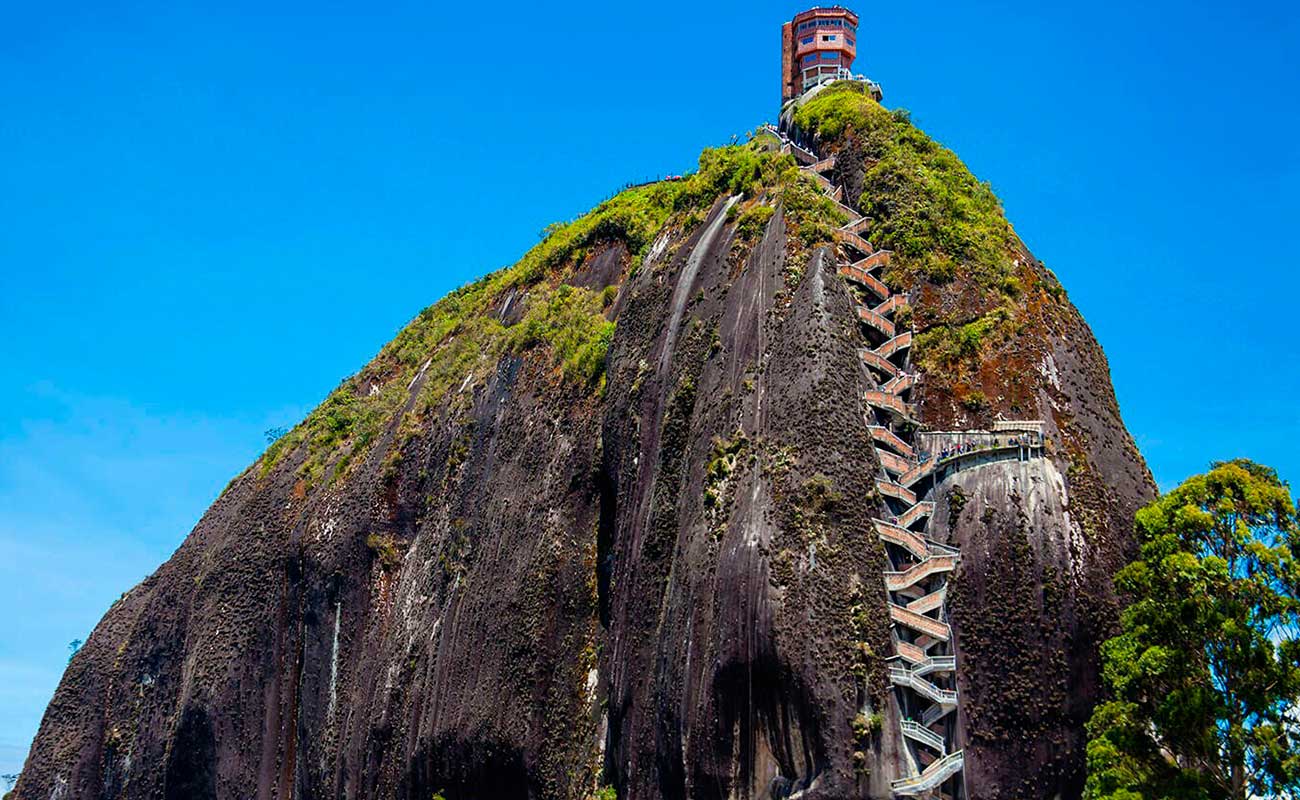
A modern city in a mountain valley with a mild, spring-like climate all year. Visitors ride the metro cable cars over the hillside neighbourhoods, tour the murals of Comuna 13 and eat and drink in El Poblado and Laureles. Guatapé, with its giant rock of El Peñol and colourful town, is an easy day trip about two hours away.
- Airport
- José María Córdova (MDE), about 45 minutes from the city: non-stops from several US cities, Panama and Santo Domingo
- Best months
- Pleasant all year; driest December to March and June to August
- How long
- 3 to 4 days, plus a day for Guatapé
- Suits
- City lovers, nightlife, digital nomads
7.The Coffee Region: Salento, Cocora Valley and Filandia
Green hills, coffee farms and small towns with brightly painted balconies. Salento is the base for the Cocora Valley, where the world’s tallest palm trees, the wax palms, stand on misty hillsides; the classic loop walk takes five to six hours. Filandia is a quieter alternative to Salento.
- Airport
- Pereira (PEI) or Armenia (AXM), mostly domestic flights, then about 1 hour by road
- Best months
- December to February and June to August
- How long
- 3 to 4 days
- Suits
- Walkers, coffee lovers, a slower pace
8.Bogotá
The capital sits at about 2,640 m, so it is cool, and some visitors feel the altitude for a day or two. Spend time in the old quarter of La Candelaria, the Gold Museum with its collection of pre-Hispanic gold, and on Monserrate, the mountain above the city, reached by cable car or funicular.
- Airport
- El Dorado (BOG), the main hub, with non-stops from many US cities, Toronto, Panama and the Caribbean
- Best months
- December to March and June to August
- How long
- 2 to 3 days
- Suits
- Museums, food, a start or end point
9.Villa de Leyva and Barichara
Two of the best-preserved colonial towns in Colombia, with whitewashed houses and cobbled streets. Villa de Leyva, about three to four hours from Bogotá, has one of the largest town squares in South America. Barichara, in Santander, is linked to the village of Guane by the old stone Camino Real, an easy half-day walk.
- Getting there
- By road from Bogotá (Villa de Leyva) or Bucaramanga (Barichara)
- Best months
- December to March
- How long
- 2 days each
- Suits
- History, photography, a quiet break
Safety and travel advice
Travel advice for Colombia varies a lot by region. In 2026, the US State Department’s overall advisory is Level 3, “reconsider travel”, with “do not travel” warnings for specific departments, including rural Valle del Cauca around Cali, Cauca, Arauca and Norte de Santander. None of the places on this list are in those areas. Canada advises a high degree of caution, with regional warnings.
In the cities, the most common risks for visitors are theft and scams, including robberies arranged through dating apps. Use registered taxis or ride-hailing apps, don’t leave drinks unattended and check your government’s latest advice before you book.
Frequently asked questions
What is the best place to visit in Colombia for beaches?
San Andrés and Providencia have the clearest water. On the mainland, the Rosario Islands and Playa Blanca near Cartagena, and Tayrona National Park near Santa Marta, are the best-known beaches.
Cartagena or Medellín: which should I visit?
Cartagena for Caribbean heat, colonial streets and boat trips to the islands; Medellín for a mild climate, city life and the mountains. With a week or more, many visitors do both and fly between them in about an hour.
When is the best time to visit Colombia?
December to April is driest on the Caribbean coast. In the Andes, including Bogotá, Medellín and the Coffee Region, December to March and June to August are drier.
Is Tayrona National Park open all year?
No. It closes for about two weeks three times a year, usually in February, June and October to November, and occasionally for longer. Check Parques Nacionales before you go.