
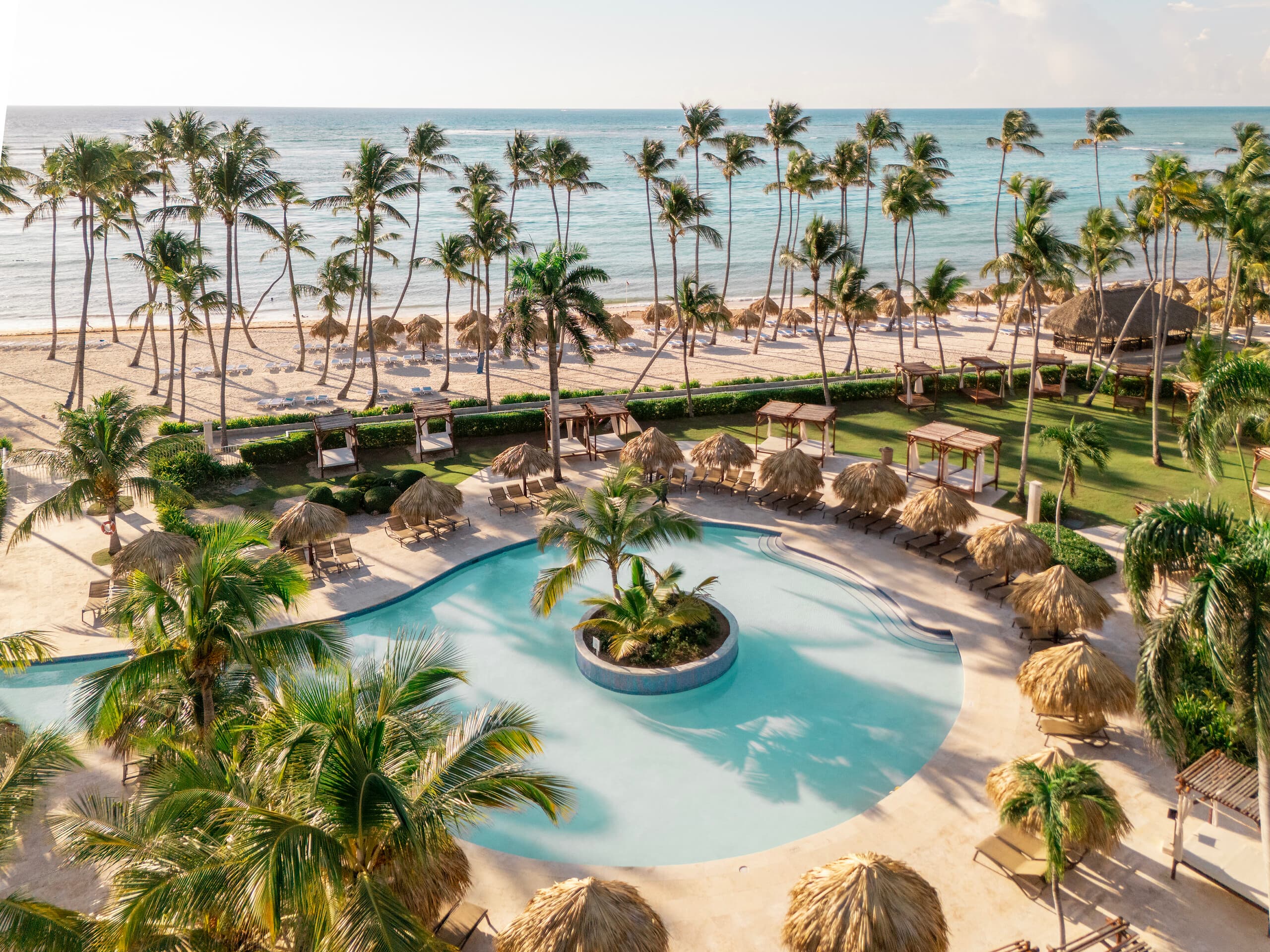
Punta Cana is the name most people use for the whole eastern tip of the Dominican Republic, in La Altagracia province. Strictly speaking it covers a string of distinct areas, from Uvero Alto in the north through Bávaro to Cap Cana in the south, all sharing a long coastline of white sand and palm trees.
It is one of the Caribbean’s biggest all-inclusive resort areas, and many visitors happily spend their whole stay on property. But there is plenty to do beyond the resort: island boat trips, freshwater cenotes, eco-parks and a short drive to colonial history.
Spanish is the national language and the Dominican peso is the currency, though US dollars are widely accepted in tourist areas and English is commonly spoken at resorts.
Top things to do in Punta Cana
- 1
Take a boat trip to Saona Island
Part of the Cotubanamá National Park off the south-east coast, Saona is known for its palm-fringed beaches and the shallow natural pool where starfish are often seen. Most trips leave from Bayahibe.
- 2
Swim in the Hoyo Azul cenote
A clear blue freshwater pool at the foot of a cliff in Cap Cana, reached through Scape Park, which also offers ziplines and other activities.
- 3
Walk the trails at Indigenous Eyes
A reserve near the airport with forest trails and a series of freshwater lagoons you can swim in.
- 4
Visit Altos de Chavón
A recreated Mediterranean-style stone village above the Chavón River near La Romana, with shops, galleries, a church and an open-air amphitheatre.
- 5
See the Basilica in Higüey
The province’s main town is home to a striking modern basilica, one of the most important places of pilgrimage in the country.
- 6
Day trip to Santo Domingo
The capital’s Colonial Zone is a UNESCO World Heritage Site and the oldest European city in the Americas. It is a long day, so leave early.
- 7
Go to Isla Catalina
A small island off La Romana with clear water and reef snorkelling, often visited by catamaran.
- 8
Surf or watch the waves at Macao
One of the few beaches in the area with regular surf, with surf schools and an undeveloped feel.
- 9
Snorkel and sail on a catamaran
Catamaran trips along the Bávaro coast stop at reefs for snorkelling and at shallow sandbanks for a swim.
- 10
Play golf
Punta Cana and Cap Cana have several well-known golf courses, some with holes running right along the sea.
Beaches in and around Punta Cana
The coastline is almost one continuous beach, broken into named stretches. Water conditions change along the coast, so ask about swimming conditions at your resort.
Bávaro Beach
The best-known stretch, with soft white sand, palm trees and many resorts. Usually calm thanks to the offshore reef.
Playa Macao
North of Bávaro, a beautiful undeveloped beach with more surf. Better for watching or surfing than for an easy swim.
Juanillo Beach
In Cap Cana to the south, a quieter, upscale beach with clear water.
Cabeza de Toro and Arena Gorda
Calmer beaches on either side of Bávaro, each with resorts and a slightly quieter feel.
Uvero Alto
The northernmost resort area, with a wilder, less developed beach.
Where to stay in Punta Cana
Bávaro
The heart of the resort area, with the widest choice of all-inclusive hotels, shops and restaurants.
Cap Cana
A gated upscale area to the south, with luxury hotels, a marina, Juanillo Beach and golf.
Uvero Alto
Further north and more secluded, with large resorts and a quieter coastline. Expect a longer airport transfer.
Cabeza de Toro and Punta Cana Village
Smaller, calmer areas closer to the airport, good for shorter stays.
Compare live rates in every area on our hotel search, or bundle your stay with flights in a Dominican Republic flight + hotel package. Island Craze members get member rates on hotels and on the hotel part of packages, and earn 5 Island Craze Points per $1 on hotel bookings to use on future hotel stays.
Getting to Punta Cana
Punta Cana International Airport (PUJ) is the main gateway and sits close to the resort coast. Bávaro, Cabeza de Toro and Cap Cana are a short drive away; Uvero Alto takes noticeably longer.
Las Américas International Airport (SDQ) in Santo Domingo is the other option, useful if you are combining the capital with the beach, but the drive east is long. Pre-booked transfers are the easiest way to reach your resort. Check the official Dominican government requirements for entry forms before you travel.
Best time to visit Punta Cana
December to April is the driest and busiest period, with the highest demand around Christmas, New Year and Easter. Summer is hot and humid, with short tropical showers.
The Atlantic hurricane season runs from June to November, with the highest risk typically from August to October. Many people still travel then, but flexible bookings and travel insurance are worth considering.
Punta Cana FAQs
Where is Punta Cana?
Punta Cana is on the eastern tip of the Dominican Republic, in La Altagracia province, where the Caribbean Sea meets the Atlantic. The Dominican Republic shares the island of Hispaniola with Haiti, east of Cuba and Jamaica and west of Puerto Rico.
Which airport do I fly into for Punta Cana?
Fly into Punta Cana International Airport (PUJ). It is close to the main resort areas of Bávaro and Cap Cana.
Is Punta Cana a city?
Not really. Punta Cana is the name used for the resort coast on the eastern tip of the Dominican Republic, which includes Bávaro, Cap Cana, Uvero Alto and other areas.
Do I need Dominican pesos in Punta Cana?
US dollars are widely accepted at resorts and on tours, but pesos are useful for small purchases and local businesses outside the resorts.
Is the sea calm in Punta Cana?
Much of the coast, including Bávaro, is protected by a reef and usually calm. Beaches such as Macao and parts of Uvero Alto can have stronger surf, so follow local flag warnings.
How do I get to Saona Island from Punta Cana?
Most Saona trips include a road transfer to Bayahibe, then a boat or catamaran to the island. It is a full-day excursion.
Join the Adventure Club for member-only hotel rates, Island Craze Points on hotel stays and help planning your Punta Cana trip.
Start 30 days free